AI-ready uptime monitoring and programmable status pages for DevOps teams
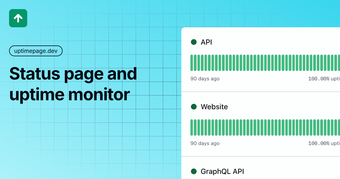
uptimepage, from Uptimepage, is an open-source uptime monitoring and status page builder that uses the Model Context Protocol to let AI agents assist with operations. The app performs multi-region checks, SSL/TLS and DNS health probes, and exposes a public status page with incident timelines. Accessible via a full REST API and a Terraform provider, it targets DevOps engineers and technical teams needing programmable monitoring and AI-assisted operational workflows. It supports hosted and self-hosted deployments, enabling local control and data sovereignty.
What monitoring tasks does it actually handle?
The tool produces active uptime checks and health signals for web services and background jobs. Supported checks include:
- HTTP/HTTPS and TCP probes
- ICMP ping and DNS record checks
- TLS certificate expiration and domain expiry
- Heartbeat monitors for cron jobs
Those check types map directly to the common problems DevOps teams track, from expired certificates to missed scheduled jobs.
How consistent are the monitoring signals?
Multi-region monitoring reduces false positives by combining results from several vantage points rather than a single probe. The app stores high-cardinality results in ClickHouse, which supports detailed queryability for incident investigation. Users can set configurable alert thresholds and automatic recovery notices, so notifications reflect configured sensitivity instead of raw probe flaps.
Will it fit into an automated deployment pipeline?
The platform is API-first, exposing a full REST API and a Terraform provider so monitors and pages are manageable as code. Deployers can use a self-hosted single binary on Linux/Unix backed by Postgres and ClickHouse, or use the hosted service. That architecture supports CI/CD integration and scripted provisioning without manual dashboard steps.
Where do alerts and reports get routed?
Notifications deliver to common incident channels: Slack, Discord, Microsoft Teams, Telegram, PagerDuty, Pushover, and generic webhooks. Those integrations let the tool feed existing on-call and collaboration workflows rather than requiring a separate communications stack, so teams can consume alerts in their current platforms.
Best suited to teams prepared to manage agent access and authentication
To enable AI-driven oversight, teams point an MCP-compatible client at the official endpoint mcp.uptimepage.dev and authenticate agents via OAuth, so identity and access management must be planned before enabling agent control. For teams that can operate OAuth flows and maintain a Postgres/ClickHouse backend, the app provides programmatic monitoring that supports automation; otherwise expect additional setup work before AI agents can act on your infrastructure.